MICHIGAN BOTANICAL SOCIETY
SOUTHWESTERN CHAPTER FIELD TRIP
Oak Barrens in Ft Custer State Recreation Area
Joe Trapp
Michigan Botanical Society, Southwestern Chapter
Saturday August 8, 2026, 10am
Oak Savannas and associated prairies once occurred in a shifting mosaic of upland and wetland plant communities that depended on frequent fire for maintaining open and semi-open conditions. All these communities are now rare or nearly extirpated from Michigan.
Oak Barrens are fire-dependent savannas dominated by oaks, having between 5% and 60% canopy with a wide range of shrub cover above the forb and graminoid ground layer. The flora of savannas was a mixture of prairie and forest species, with prairie forbs and grasses more abundant in open areas and forest forbs and woody species more common in shaded areas.
A few notable plants: Amorpha canescens (lead plant), Asclepias tuberosa (butterfly milkweed), Campanula rotundifolia (bluebell), Ceanothus americanus (New Jersey tea), Comandara umbellata (bastard toadflax), Crocanthemum candadense (Canada frostweed), Desmodium canadense (showy tick-trefoil), D. illinoense (Illinois tick-trefoil), D. marilandicum (Maryland tick-trefoil), D. paniculatum (arrow-leaf tick-trefoil), D. perplexum (perplexing tick-trefoil), Hepatica americana (roundlobe hepática), Heuchera richardsonii (Richardson’s alumroot), Lespedeza capitata (roundhead bush clover), L. hirta (hairy lespedeza), Liatris scariosa (northern blazing star), Lysimachia quadrfolia (whorled loosestrife), Minuartia michauxii (rock sandwort), Monarda fistulosa (wild bergamot), Pedicularis canadensis (wood betony), Penstemon hirsutus (hairy beardtongue), Phlox pilosa (prairie phlox), Ranunculus fasicicularis (early buttercup), Ratibida pinnata (grayhead prairie coneflower), Rosa carolina (prairie rose), Rudbeckia hirta (blackeyed Susan), Schizachyrium scoparim (little blue stem), Sisyrinchium angustifolium (blue-eyed grass), Tradescantia ohienis (Ohio spiderwort), Viola pedata (birdfoot violet).
The site we will be visiting is adjacent to a trail so it’s very accessible. However, scrambling across a steep slope will be difficult. Mosquito repellent and/or netting, sunscreen, water as well as suitable clothing are suggested.
Joe Trapp is the current President of the Southwestern Chapter of the Michigan Botanical Society.
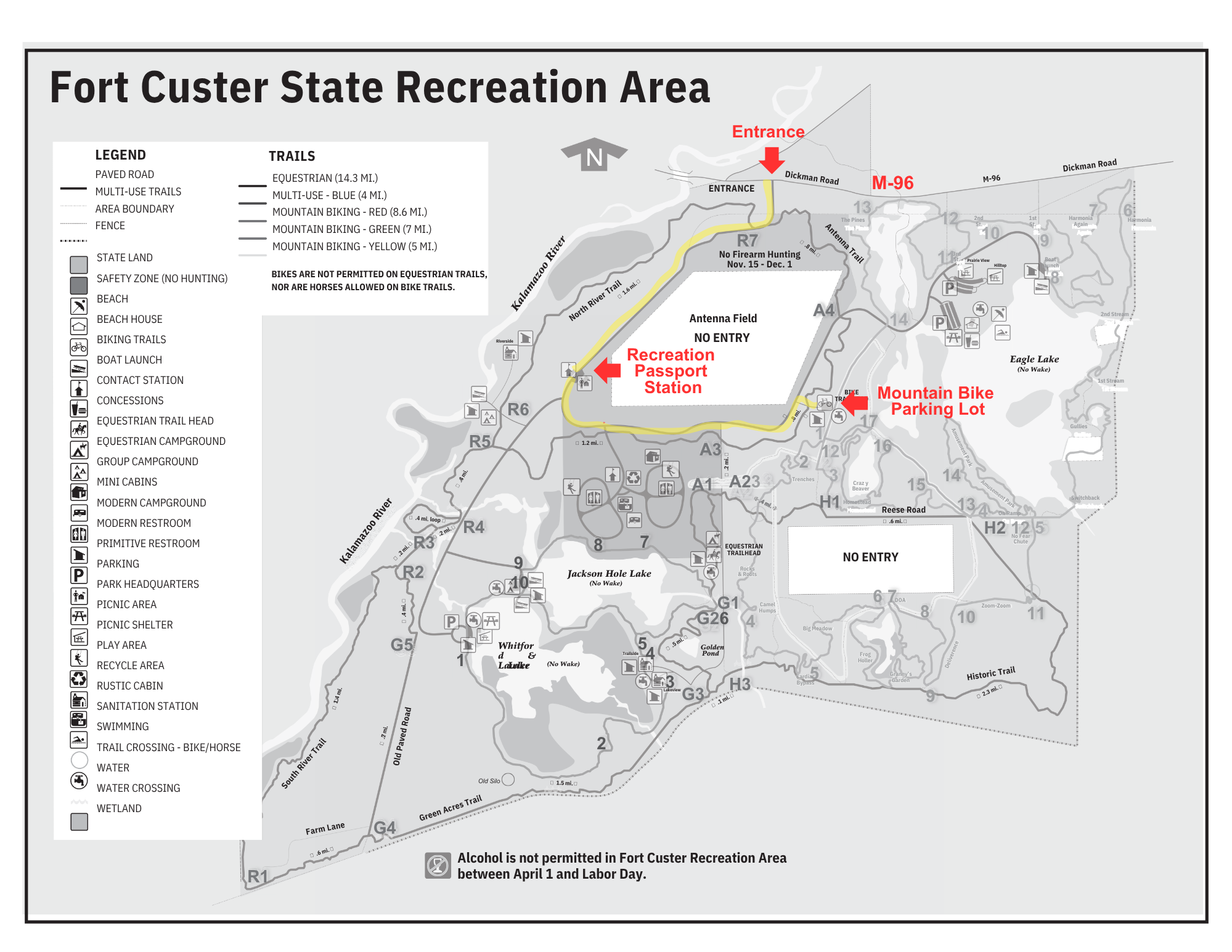
Note: All motorized vehicles entering the state recreation area are required to have a Recreation Passport for entry. Recreation Passports can be purchased in advance or on-site. For more information: https://www.michigan.gov/dnr/Buy-and-Apply/rec-pp
Directions: The address is 5163 Fort Custer Drive, Augusta, Michigan, 49012. The coordinates are 42.334655079887106, -85.33835080491731. From the Kalamazoo area, take I-94 eastbound to exit 85 and turn left (north) on 35th St. You will cross the Kalamazoo River and then turn right on to West Battle Creek St. There is road construction on Battle Creek St., so you will need to make a small detour. In downtown Galesburg, turn right (east) onto to East Michigan St. and in 0.2 miles, left (north) onto Burgess Dr. In 0.6 miles, you will cross railroad tracks and then turn right (east) on to East Battle Creek St (M-96). Stay on M-96 through Augusta MI and you will cross the Kalamazoo River again. The entrance to the State Recreation Area is on your right (south). We will meet in the mountain bike parking lot. See the Ft Custer State Recreation map below).